description: Scrape & Crawl the web with Spider - the fastest open source web scraper & crawler.
Spider Web Scraper/Crawler
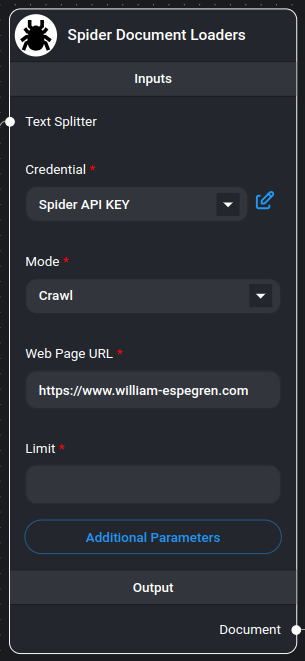
Spider Web Scraper/Crawler Node
Spider is the fastest open source web scraper & crawler that returns LLM-ready data. To get started using this node you need an API key from Spider.cloud.
Get Started
- Go to the Spider.cloud website and sign up for a free account.
- Then go to the API Keys and create a new API key.
- Copy the API key and paste it into the "Credential" field in the Spider node.
Features
- Two operation modes: Scrape and Crawl
- Text splitting capabilities
- Customizable metadata handling
- Flexible parameter configuration
- Multiple output formats
- Markdown-formatted content
- Rate limit handling
Inputs
Required Parameters
- Mode: Choose between:
- Scrape: Extract data from a single page
- Crawl: Extract data from multiple pages within the same domain
- Web Page URL: The target URL to scrape or crawl (e.g., https://spider.cloud)
- Credential: Spider API key
Optional Parameters
- Text Splitter: A text splitter to process the extracted content
- Limit: Maximum number of pages to crawl (default: 25, only applicable in crawl mode)
- Additional Metadata: JSON object with additional metadata to add to documents
- Additional Parameters: JSON object with Spider API parameters
- Example:
{ "anti_bot": true } - Note:
return_formatis always set to "markdown"
- Example:
- Omit Metadata Keys: Comma-separated list of metadata keys to exclude
- Format:
key1, key2, key3.nestedKey1 - Use * to remove all default metadata
- Format:
Outputs
- Document: Array of document objects containing:
- metadata: Page metadata and custom fields
- pageContent: Extracted content in markdown format
- Text: Concatenated string of all extracted content
Document Structure
Each document contains:
- pageContent: The main content from the webpage in markdown format
- metadata:
- source: The URL of the page
- Additional custom metadata (if specified)
- Filtered metadata (based on omitted keys)
Scrape & Crawl
- Choose either "Scrape" or "Crawl" in the mode dropdown.
- Enter the URL you want to scrape or crawl in the "Web Page URL" field.
- If you chose "Crawl", enter the maximum amount of pages you want to crawl in the "Limit" field. If no value or 0 is entered, the crawler will crawl all pages.
Usage Examples
Basic Scraping
{
  "mode": "scrape",
  "url": "https://example.com",
  "limit": 1
}
Advanced Crawling
{
  "mode": "crawl",
  "url": "https://example.com",
  "limit": 25,
  "additional_metadata": {
    "category": "blog",
    "source_type": "web"
  },
  "params": {
    "anti_bot": true,
    "wait_for": ".content-loaded"
  }
}
Example
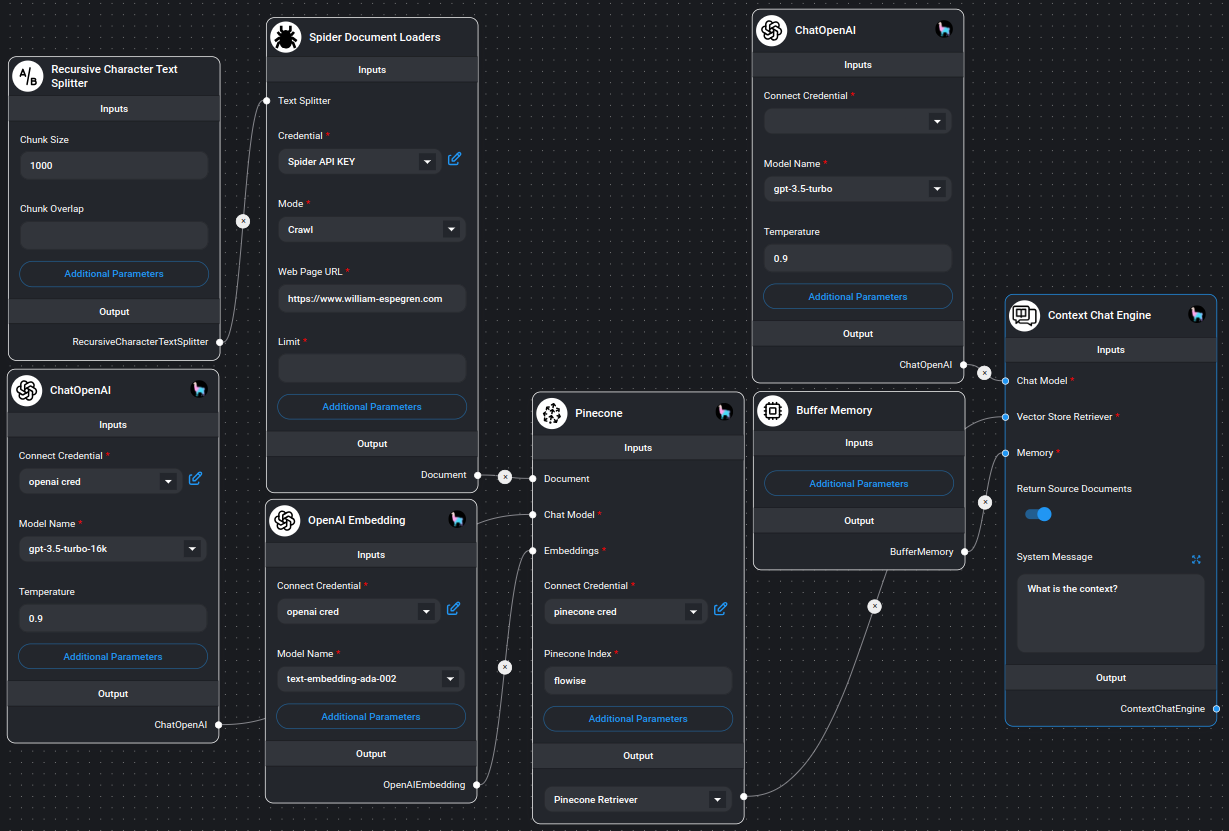
Example on using Spider node
Notes
- The crawler respects the specified limit for crawl operations
- All content is returned in markdown format
- Error handling is built-in for both scraping and crawling operations
- Invalid JSON configurations are handled gracefully
- Memory-efficient processing of large websites
- Supports both single-page and multi-page extraction
- Automatic metadata handling and filtering